Kupe returned to Hawaiki and left instruction on how to get here. About 400 years later Maori arrived back in Aotearoa in seven great canoes and began to populate the North Island. You will fly the length of our Long White Cloud on this tour.
This tour includes all the highlights of our seven and eleven-day itineraries, plus many in the North Island.
Less mountainous than the South, the North Island has a central volcanic plateau – still active with boiling mud pools, geysers and steam vents. It is also a major centre for Maori art and culture. You can take your time in the modern museum of New Zealand (Te Papa) in Wellington. Visit the temperate wine and fruit growing regions of the East Coast. Fly north to remote East Cape, then to the Coromandel Peninsula and Hauraki Gulf. Still further north, you can fly the 90 mile beach to Cape Reinga (the very northern tip of New Zealand) and enjoy the semi tropical areas of Northland and the Bay of Islands.
Beginning at one end of the country and finishing at the other, the Long White Cloud makes excellent use of every minute that you spend in New Zealand.
You will be met by your personal host and instructor at Queenstown Airport. After your briefing, fly to Geordie Hill Station near Wanaka, where you will be welcomed by Jo & Matt McCaughan, founders of Flyinn. Here you’ll enjoy great morning coffee and hot scones to welcome you to the Flyinn experience.
Today is your introduction to mountain flying, plus familiarization to the Wanaka Airport and region. Should weather permit, we shall also explore further afield to one of the destinations of your itinerary.
Toward the end of the day transfer to Wanaka, where you can enjoy a tour of the town, before being shown to your apartment. This is where you will be based for the scenic southern start to your itinerary.
Evening: Settle into your surroundings, before enjoying the short scenic walk into town for your choice of dining. Stroll home for a good night’s rest in readiness for the wonderful flying and scenic adventures of the coming weeks.
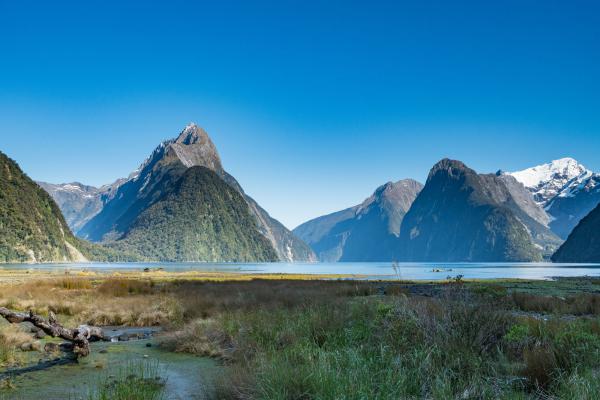
Fly to world famous Milford Sound via Te Anau, the Wilmott Pass and the Milford Track. Spectacular deep fiords and rainforest running up onto weathered peaks abound. Many high mountain tarns and lakes feed waterfalls, which fall vertically hundreds of feet into the fiords below.
Land at Milford Sound. Take a walk and view the Bowen falls, and absorb the magnificent atmosphere. Fly to Big Bay, and land on the vast beach (depends on tide). Lunch at Milford or enjoy Elsie’s date loaf at Big Bay.
Back to Wanaka via Aspiring National Park and view the expanse of Lakes Wanaka and Hawea in the late afternoon light. (Mt Aspiring is known as the ‘Matterhorn’ of the South, and is flanked by pristine glaciers).
Evening: Enjoy your choice of restaurant dining in Wanaka.
Night away in Dunedin. Begin today navigating a southern route via the Nevis or Kawarau river valleys where Central Otago high country descends to lower and more fertile rolling hills and more intense farming systems.
Land at the immaculately kept Mandeville Airfield and visit Croydon Aircraft Company. Here vintage aircraft are restored, and there is a hanger where a rare collection is kept. Enjoy morning coffee, or light lunch at ‘The Moth’ café. There is the option to fly a Tiger Moth here.
Fly further south over green Southland countryside and its more rugged hinterland, the Catlins. Intersect the untamed Catlins Coastline, where a nor-east heading will track past cliffs and rocky outcrops, beaches and river mouths, all the way to your destination – Taieri Airfield and Dunedin City.
Known as the ‘Edinburgh of the South’ Dunedin was built around a natural harbour on the back of a gold-rush. It was one of the first cities in NZ, and as such offers period architecture, an excellent local-history museum, a surprising abundance of marine life, plus botanic gardens and local shops for a little more indulgence.
Once settled in your accommodation, enjoy your choice of city life.
Evening: Join your hosts to dine at one of Dunedin’s excellent restaurants. (Dinner and drinks incl.)
Harbour Cruise: join Rebecca for a tour of Dunedin’s harbour and beyond. Learn about the local marine and bird-life including penguins and an established Albatross Colony. There is a delightful variety of wildlife living right on the parameters of this busy port city.
Back on land, explore more of the city before driving over the surrounding hills to reconnect with your aircraft. Fly westward, over an increasing arid landscape to sunny central Otago, and your home in Wanaka.
Evening: Take the popular walk up Mount Iron on the outskirts of town, to view 180’ evening light on the mountains. Try a new restaurant, or order take-out food to enjoy from the small wharf on the waterfront with a chilled local beer. Options are endless.
Explore local Central Otago: Land on some farm airstrips as you make your way around this prosperous region where farmers raise merino sheep, winegrowers are renowned for their Pinot Noir and fruit growers for stone fruit.
Tucked away in an unsuspecting corner is a fabulously preserved slice of history - Hayes Engineering. Here one family lived, invented, and developed practical and leading technology of the day. Take a walk back through time, and learn of this families’ entrepreneurial contribution, some of which is still used on farm today.
Make your way around the region to land back where you first began, at Geordie Hill Station. Join the farm program on the day. Learn first-hand about our farming systems and infrastructure. Watch how shepherds shift stock with their dogs. See if you can make a Shepherd’s whistle work.
Evening in Wanaka: Free to wander and enjoy the mountainous vista before choosing your favourite restaurant. Perhaps tonight’s cuisine and glass of local pinot noir, will be enhanced by memories of your day.
Dramatic Glenorchy region and the Dart River Jet Boat excursion. This day can begin by flying to an interesting local airstrip or two.
At Glenorchy there is time for a brief lunch before joining the Dart River Jet experience. This is a mighty river and mountain experience. The jetboat is a NZ invention and a must-do when visiting New Zealand. The spectacular mountain and river-valley scenery in this region is popular with the film industry. Returning to Wanaka, you will now recognise the surrounding countryside, and feel like you are on your way home.
Evening: Catch up on your photos and share a few with friends, as you relax with a chilled wine and reflect on all you have done so far. You’re familiar with the stroll into town and know your favourite restaurant which can make tonight’s decision easy. Enjoy another delicious dinner before getting an early night. Your week has been active, and there’s plenty to discover yet!
Strip Flying Day: There are many airstrips, of various degrees of complexity to hone your skills on. Today offers a chance to try some of these while enjoying visits to local destinations.
To the west Makarora airstrip is nestled near the gateway to the west coast and mountains. Further west arrive at Haast and the west coast. Or track down lake Wanaka to Minaret Station airstrip, then through ‘the neck’ to Lake Hawea and the Dingleburn Station airstrip. Today you will get to explore the local valleys, meet some local people, enjoy excellent country cafés as well as spend an exciting day flying.
Alternate is to visit local attractions. These include boutique shops at Tarras. Excellent vineyard cellar doors of Tarras, Cromwell or Bannockburn. Or simply enjoy more of Wanaka’s shops or outdoor activites.
Evening Dinner: complete this scenic southern start to your itinerary by joining Flyinn hosts Matt and Jo McCaughan for evening dinner. (Dinner and drinks incl.)
Mt Cook region to Nelson: Today you say goodbye to your home in Wanaka.
Fly northwards to explore this most dramatic area with its razor sharp ridges and steep sides valleys, carved from years of glacial activity. View the icefields that supply cascading glaciers, which in turn feed a variety of lakes and river systems. At over 12,000’ Mt Cook and surrounds are made all the more spectacular because only 20 nm to the West is the shoreline of the Tasman Sea.
Continue north via the West Coast and watch as snow caps and glaciers give way to bush clad mountains, and valley farm land. An alternate en-route destination is Hokitika known for local greenstone carving. The west coast route can lead you to the very tip of the South Island and farewell spit, which curves protectively into the Tasman Bay.
Alternately choose a path through the foothills of the Southern Alps. This exciting route passes the headwaters of many magnificent river valleys, giving spectacular view of their braided nature, valley systems and surrounding farmland. Again, snow caps and glacial moraine give way to gentler slopes, open valleys, and the Canterbury plains to the east.
Nelson, where you will spend two nights, is considered the sunshine capital of New Zealand and gateway to both Abel Tasman National Part, and the Marlborough Sounds. Accommodation is well appointed motel or lodge. You will be shown the township and settled into your accommodation.
Evening: You are completely free to relax and enjoy your choice of dining.
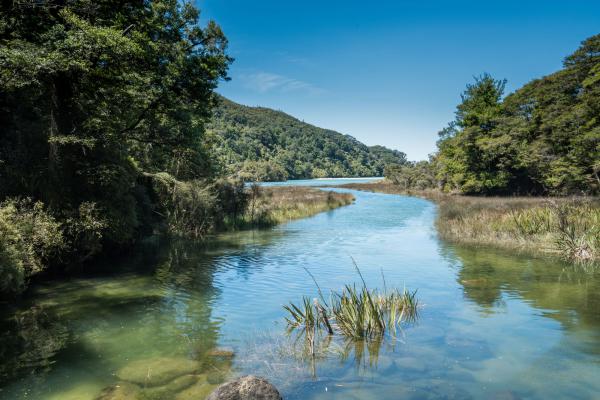
Day in the Abel Tasman National Park. This park offers a wonderful escape into New Zealand native beach forest.
Water Taxi can deliver you along a well -defined walking track where you may walk as far as you like to a wonderful bush café serving cold drinks and lunch.
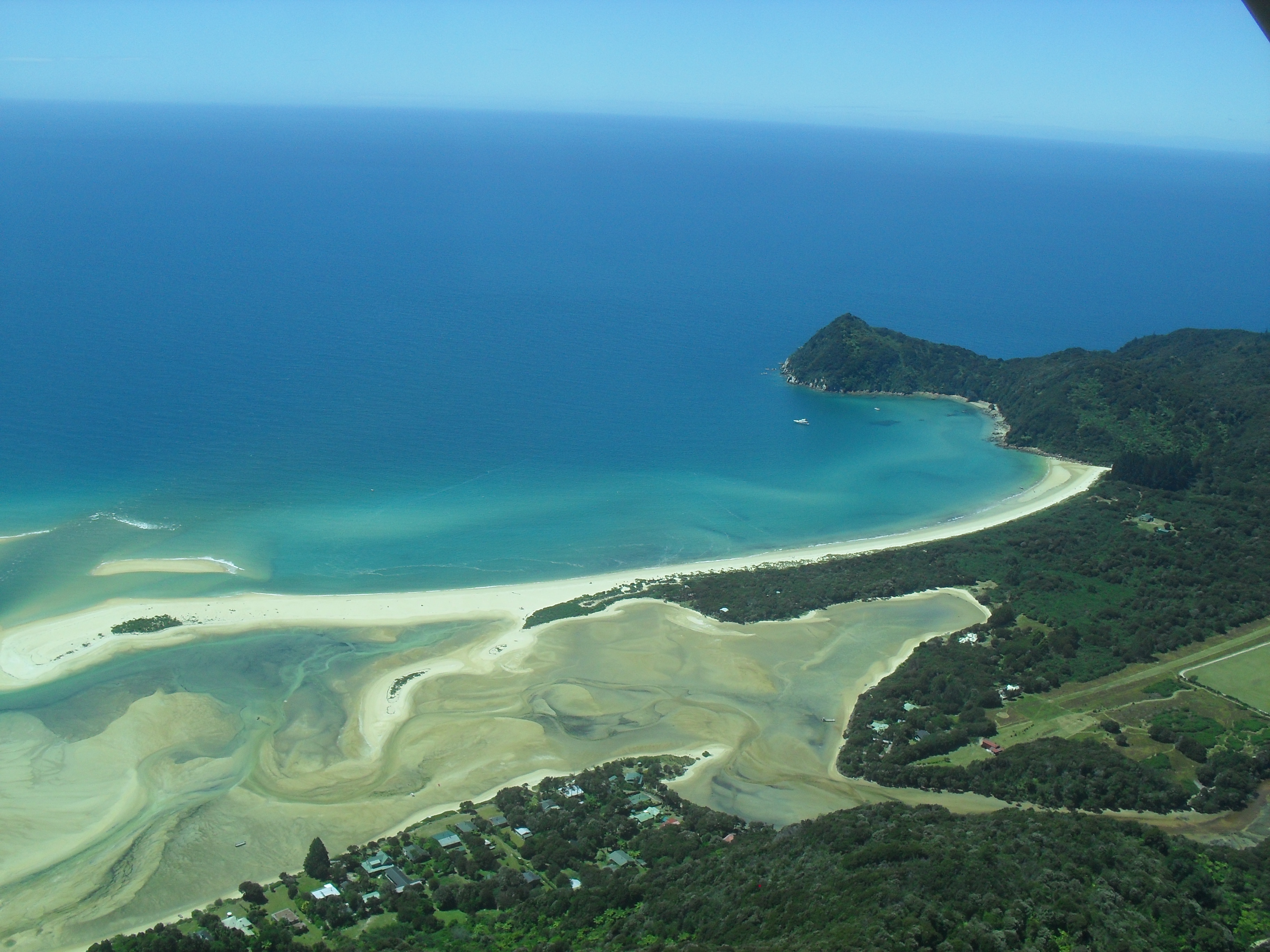
Take your time and enjoy the golden sand beaches and clear blue water. An alternate is to join a kayaking group and see the park this way. Often dolphins and seals can be viewed from the kayak or water taxi.
Evening: At the end of your day, freshen up and enjoy dinner out with your guide at one of the excellent restaurants in the vicinity. (Dinner and drinks incl.)
Depart Nelson and the South Island, for Wellington and the North Island.
Visit Omaka Airfield and the outstanding Aviation Heritage Centre. This display of WWI aircraft, memorabilia, and enacted stories is captivating to pilots and non-pilots alike. Crafted by New Zealand’s Weta Workshop team (made famous for Lord of the Rings special effects) – this is a museum you will remember.
Continue north over the Marlborough Sounds, which is a region of islands, many of which are farmed, and others are bush clad. Most offer numerous sheltered bays for boating and fishing, and holiday homes can be seen dotted about their shores.
Cross Cook Straight to New Zealand’s capital city of Wellington, built on a natural harbour. Visit the modern national museum of New Zealand known as Te Papa, and perhaps also visit parliamentary buildings and the beehive.
Evening: Free – enjoy our vibrant Capital City.
Wellington to Napier. Enjoy a morning walk along the waterfront before embarking on a well-deserved breakfast. Wellington Harbour is an integral part of the city, and ferry’s transport City workers from all around the Bays.
Today you will depart this fair City to track north along the East coast en route to Hawkes Bay and the township of Napier. This region is known for its wonderful wines and vineyard restaurants, plus its unique Art Deco architecture. Here you will spend two nights in order to enjoy the expansive waterfront, learn the Architecture story, and partake of the excellent wines and restaurants on offer.
Evening. Free to enjoy the location, and your style of dinning in Napier.
Free day in Napier – tour the city and visit a few vineyards …
Known as the Art Deco Capital of the world. Napier was rebuilt in the early 1930s following an earthquake. By the end of the decade, Napier was the newest city on the globe. Nowhere else can you see such a variety of buildings in the styles of the 1930s – Stripped Classical, Spanish Mission, and above all Art Deco, even more unique with Māori motifs.
This Region is New Zealand’s oldest wine region with beginnings in 1851. By the early 1920’s, a number of vineyard Estates were well established in the region. The soils and climate that so excited these pioneers continues to provide the inspiration for the current generation of Hawke’s Bay winemakers. Visiting some vineyards is a popular way to spend part of your day.
Evening: Dine at one of the many fine Vineyard Restaurants. (Dinner and Drinks incl.)
Napier to Rotorua. Depart Napier and continue North up the coastline to Gisborne - one of Captain Cook’s early landing sites. Gisborne’s airfield is unique due to traffic lights which flash red to warn of the impending train about to cross the runway! Once said train has departed all air traffic can resume operations.
If time permits stretch your legs here, then fly further north over the remote kiwifruit orchards of the East Cape. This coast follows a remote area of New Zealand where a large population of Maori people enjoy living in close connection with their families and culture. From the air you are able to detect small remote Māori villages, and their Marae, along with spectacular beaches and cliffs where the hills drop into the ocean.
Once around the Cape, continue westward before veering south and inland to Rotorua. This town is situated in the heart if New Zealand’s geothermal area. Your senses will detect this immediately upon alighting. Astringent at first – you quickly become accustomed! Insight into the history of the Maori people of New Zealand, and geothermal activity of this region, are definitely worth it!
Evening: Settle into your accommodation. Take a walk around the thermal centre of town and spend the rest of your evening in Rotorua at your leisure.
Rotorua. Spend today visiting highlights of this region.
This beautiful forested area often gives way to something resembling a moonscape. Visit Waiotapu geothermal field for an instructional walk around various types of geothermal activity.
An alternate can be to spend the afternoon at Rotorua’s well-respected Agrodome, showcasing NZ agriculture.
Evening: visit Tamaki Māori Village, an in-depth Māori cultural experience and Hangi feast outside the city. Embracing protocol the Tamaki Māori Village takes visitors on a cultural journey back onto the marae (Māori Village) where the life force of our country’s indigenous people is strongest. You will enter a world of ancient Māori and proud warriors. Let the local tribes-people walk you through time to learn of the pride of the Māori, through song and dance. Watch and get to taste food being prepared and cooked the ancient way.
(Excursion and dinner incl.)
Rotorua to Great Barrier Island. Track NW where the forested hills give way to fertile farms and orchards. You will detect the Bay of Plenty northern coastline, and to the west make out the waters of Hauraki Gulf. Coromandel Peninsula separates this gulf from the Pacific Ocean, and if there’s time landing at Pauanui Airfield, one of New Zealand’s first Aviation home parks where the sea is at either end of the run way. Stroll into town for coffee before continuing en-route to enjoy the unique rock formations and plentiful hidden beaches along the coast.
Round the tip of the Coromandel Peninsula to head further North across Hauraki Gulf to land on the semi-tropical island get-away of Great Barrier Island. This island is home to small number of full-time residents, and very popular amongst sailors and people who enjoy remote beaches, bushwalks and island life.
Evening: Once settled into your accommodation, this evening is completely free. Why not take a parcel of fish and chips to the beach and enjoy with a good NZ wine.
Great Barrier to Bay of Islands. Enjoy a morning walk along one of the many Island tracks, before departing. Today’s flight-path leads you past Little Barrier Island and via the northern Port of Whangarei, before once again turning northward along the coast to the Bay of Islands.
Watch as the vegetation continues to take on a semi-tropical look. Here the climate is noticeably warmer and citrus trees abound. Inviting beach coves and rocky outcrops form the coastline.
Land at Kerikeri Airfield. You have two nights to explore this region, made famous since 1840 when the Treaty of Waitangi was signed between the indigenous Maori of New Zealand and the British Crown. Here you can continue your understanding of New Zealand’s native people.
Evening: Join your guide to dine in one of the popular café’s. If you enjoy seafood, sample the freshly caught snapper or kingfish. (Dinner and drinks incl.)
Free day in the Bay of Islands. Visit the Treaty of Waitangi grounds to learn about the beginning of a new framework New Zealander’s strives to work with, to this day.
Further history of this area: The Dutchman Abel Tasman landed in New Zealand in 1642. He charted part of the coastline and named it Staten land, believing it was part of the Australian continent. When his mistake was discovered the country was renamed Nieuw Zeeland. Then, in 1769 James Cook came to New Zealand, and extensively charted both North and South Islands. He gave the Bay of Islands its present name.
If a day on the water is a change you’d enjoy, take an outing by comfortable fast catamaran among the islands and perhaps through the hole in the rock. Alight in Russel for lunch to enjoy a stroll here. Or you might decide to take the day to go fishing or join a sailing excursion of the Bay.
There are many options, and for you to make the most of this day, the evening is kept free as well.
Evening: free.
Bay of Islands to Waiheke Island. Depart Kerikeri and follow the coastline to the furthest most northern tip of New Zealand. With a lonely lighthouse to mark the spot, Cape Reinga stretches out as though trying to keep the divide between the mighty Pacific and the Tasman Sea.
Enjoy the remote expanse of magnificent 90 mile beach as you turn to head south.
Stop for lunch at one of the townships en-route, before continuing over farmland and bush clad gullies. Before long you will find yourself in the vicinity of Auckland City. Fly over the city on track to nearby Waiheke Island.
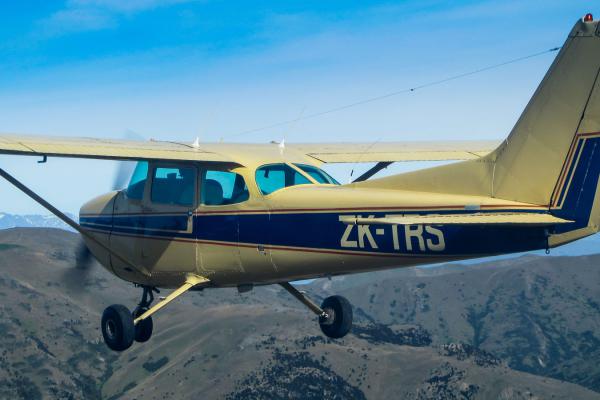
Land at Reeve Airstrip – situation on a hilltop amongst the vineyards - and tie your trusty 172 down for the last time.
Evening: Settle into your accommodation. There’s time to freshen up before joining your guide for this last evening together. This is a chance to reflect on all you have seen and done while you relax with your favourite aperitif. Dine out in one of the island’s vineyard restaurants, or popular café’s. (Dinner and drinks incl.)
Waiheke Island.
Take a stroll along the beach, or into the village for the morning paper and coffee.
Join your guide for breakfast before fond farewells as your 172 takes for the skies once more, homeward bound to Wanaka and Flyinn base.
Guests often choose to stay on Waiheke for some days to rest and enjoy a quieter pace. Being only 35 minutes from downtown Auckland on the Quikcat ferry, there is also the option of a day out in Auckland City. Visit the viaduct basin where the Americas Cup was based.
Meanwhile, back on Waiheke you can choose to relax with a book in the atmosphere of island life. Or visit some of the many art and craft galleries and shops. Hire a car and travel the island with a picnic.
As with many of the places you travel to in New Zealand, there are many great options.
We hope you enjoy the remainder of your time in our country.
 previous day



Update your browser to view this website correctly. Update my browser now